

Windows 11 is Microsoft’s desktop operating system for personal computers, responsible for controlling hardware, running applications, and providing the graphical interface through which users interact with the system. It is designed to run on a wide range of PCs from different manufacturers and supports both consumer and professional computing needs.
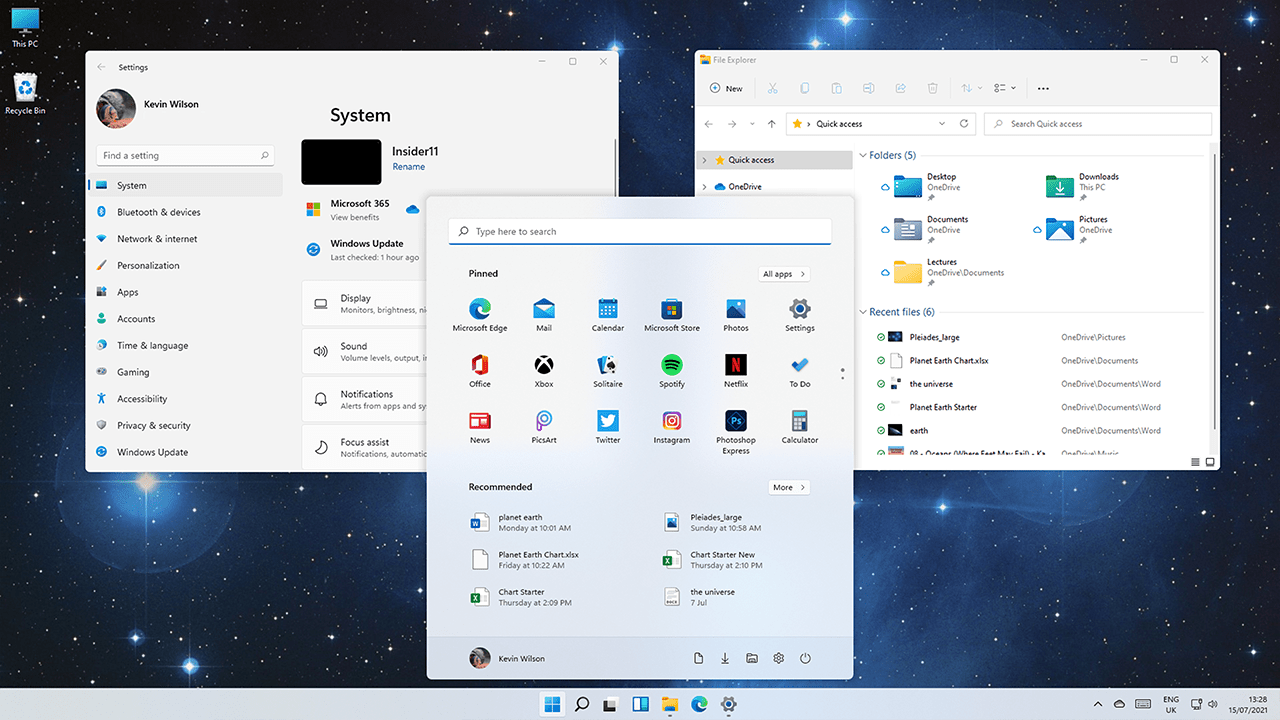
Built on the Windows NT architecture, Windows 11 provides core operating system services such as multitasking, memory management, device driver support, and networking. The operating system includes a modernized user interface, updated window-management features, and close integration with Microsoft’s cloud services, including OneDrive and Microsoft 365.
Windows 11 places a strong emphasis on security as a baseline requirement. It supports and, on compatible hardware, requires technologies such as Trusted Platform Module (TPM) 2.0, Secure Boot, and virtualization-based security, which help protect the operating system from firmware-level attacks, malware, and unauthorised access. These features work alongside built-in protections such as application sandboxing, code signing, and regular security updates delivered directly by Microsoft.